
Flat white
realisation 2025
The brief called for a home for a family of four that would function as a quiet retreat — a counterpoint to the pace and intensity of the outside world. At the same time, the clients set out an unusual ambition for a family apartment: a space defined by strict minimalism, a complete absence of colour, and the removal of conventional decorative elements. Our role was to balance this deliberately restrained approach with the practical needs of everyday life. The design therefore centres on the quality of space itself and on the careful distribution of natural light.
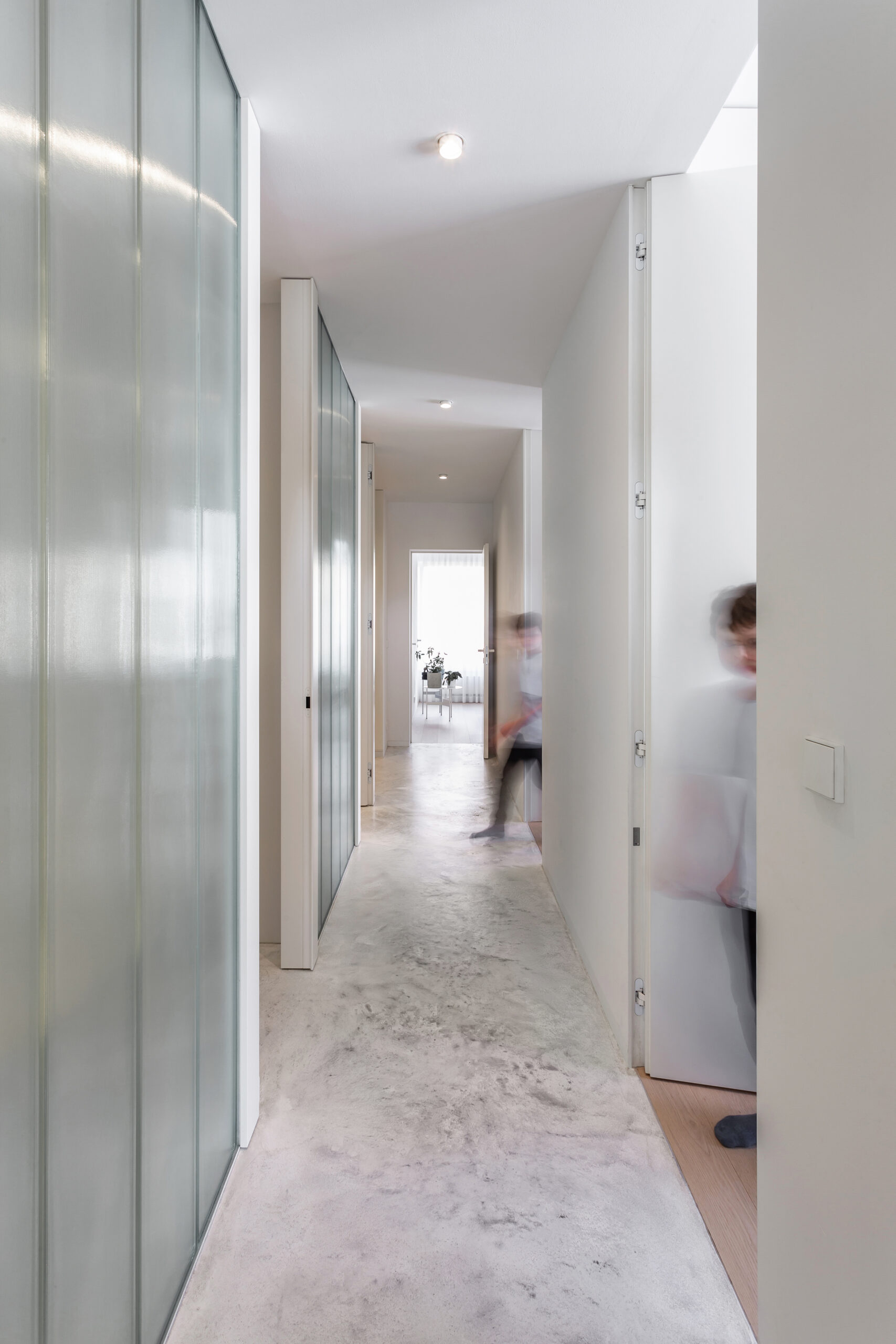
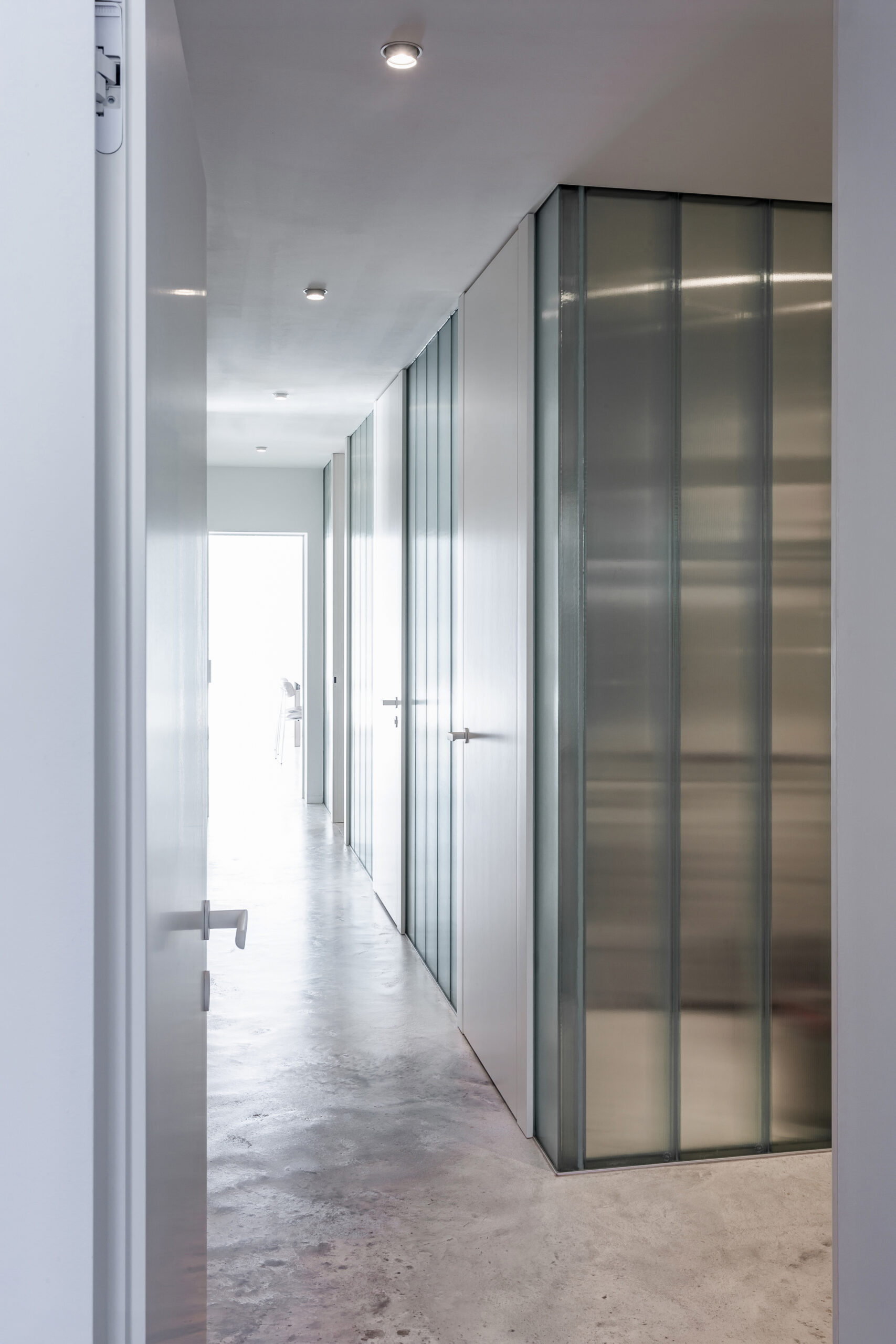
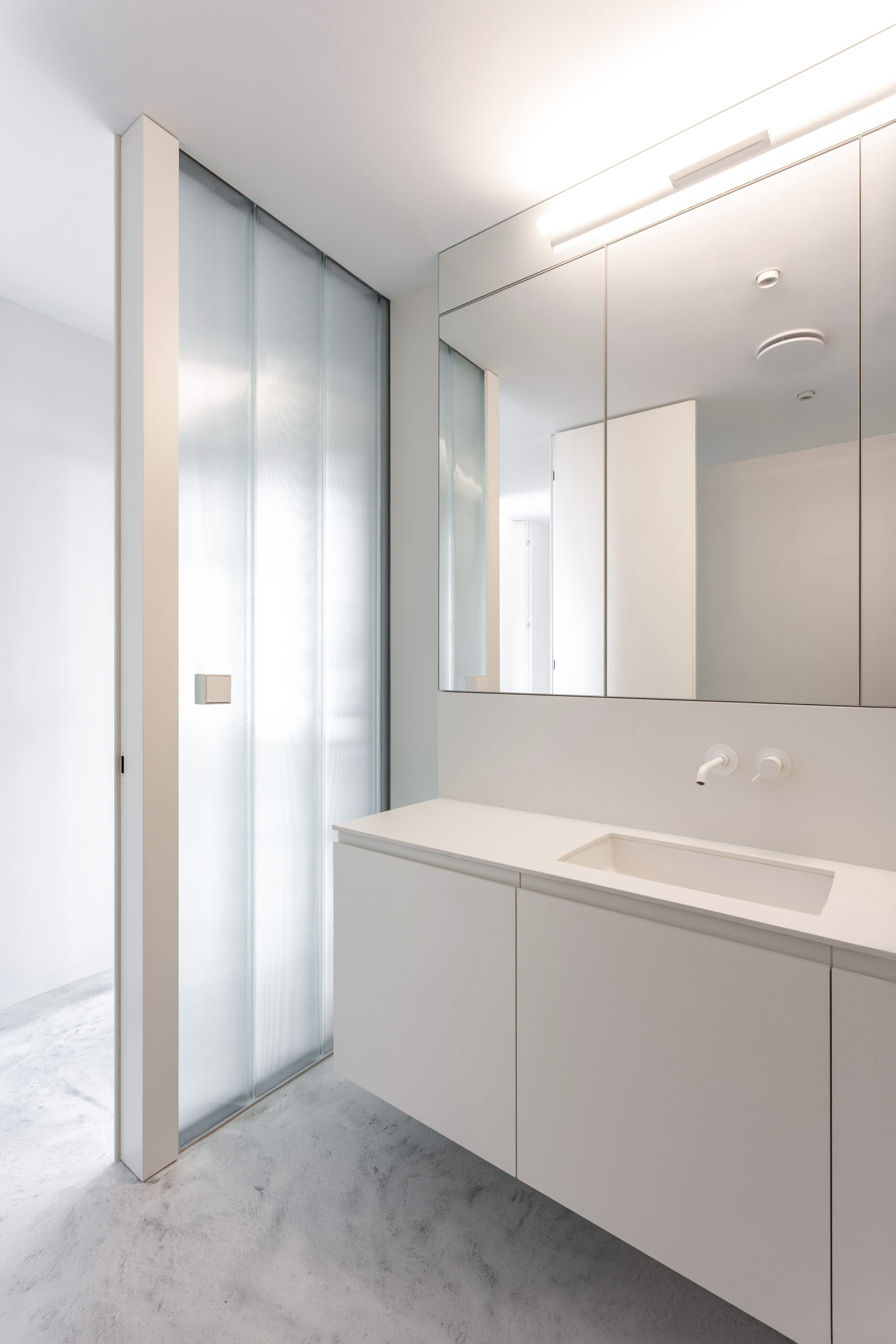
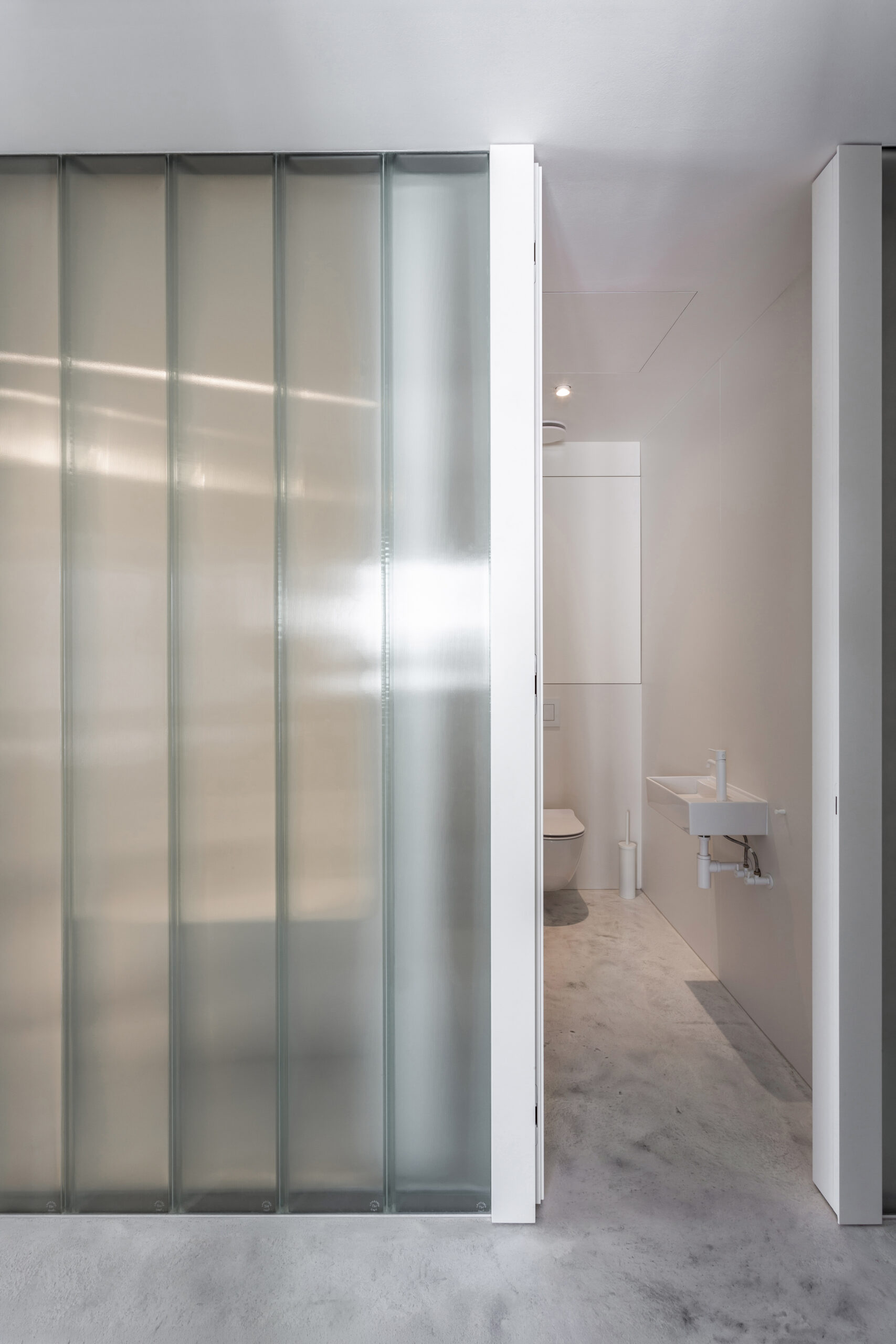
A key theme of the project was how to bring daylight into the deeper parts of the plan, beyond the reach of the façade. This led to the introduction of a channel-glass partition separating the service core from the main living area. The semi-translucent material works as a natural light conductor, allowing daylight to filter deep into the apartment while maintaining privacy. The result is a softly illuminated entrance sequence whose character is defined by diffused light rather than transparency.
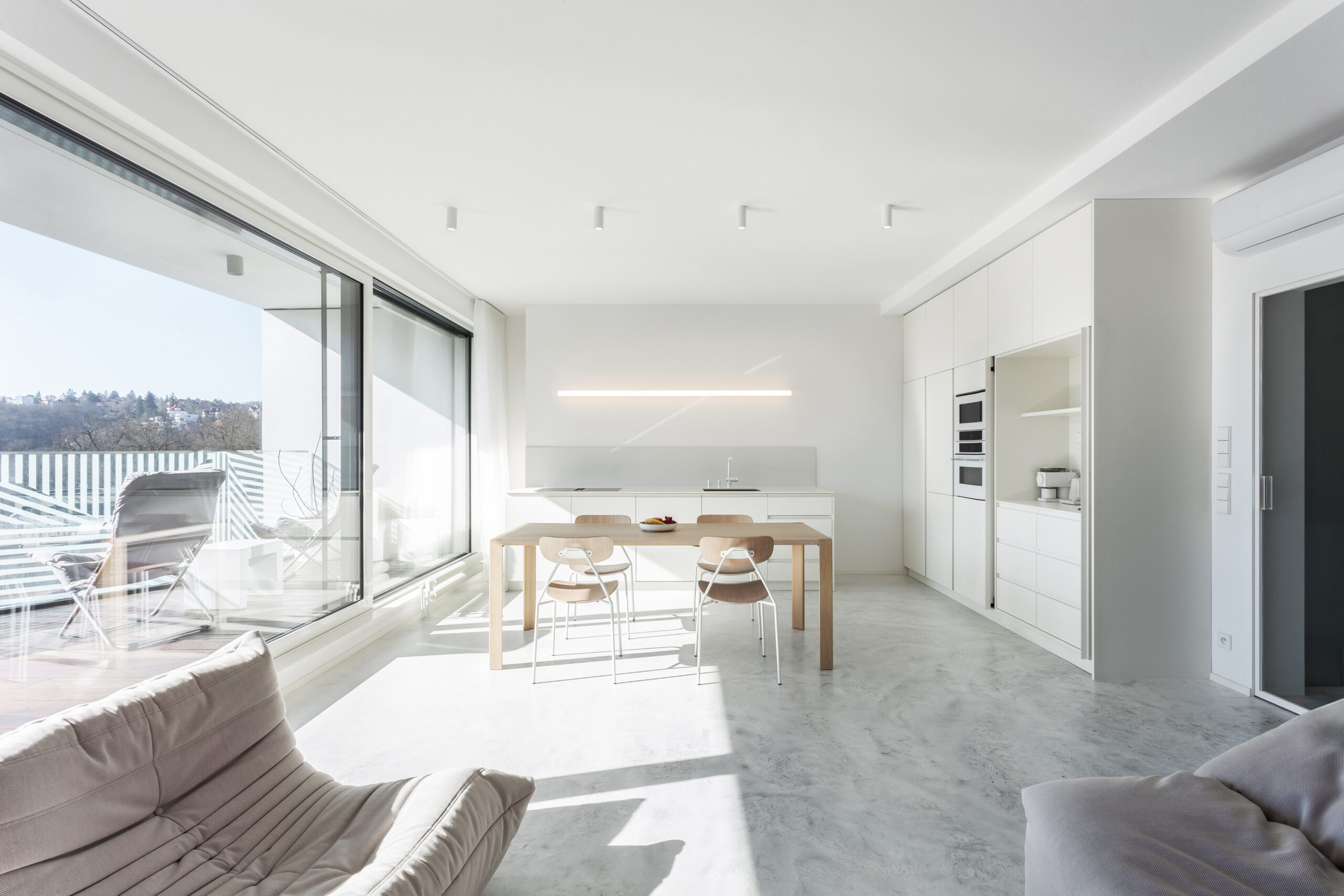
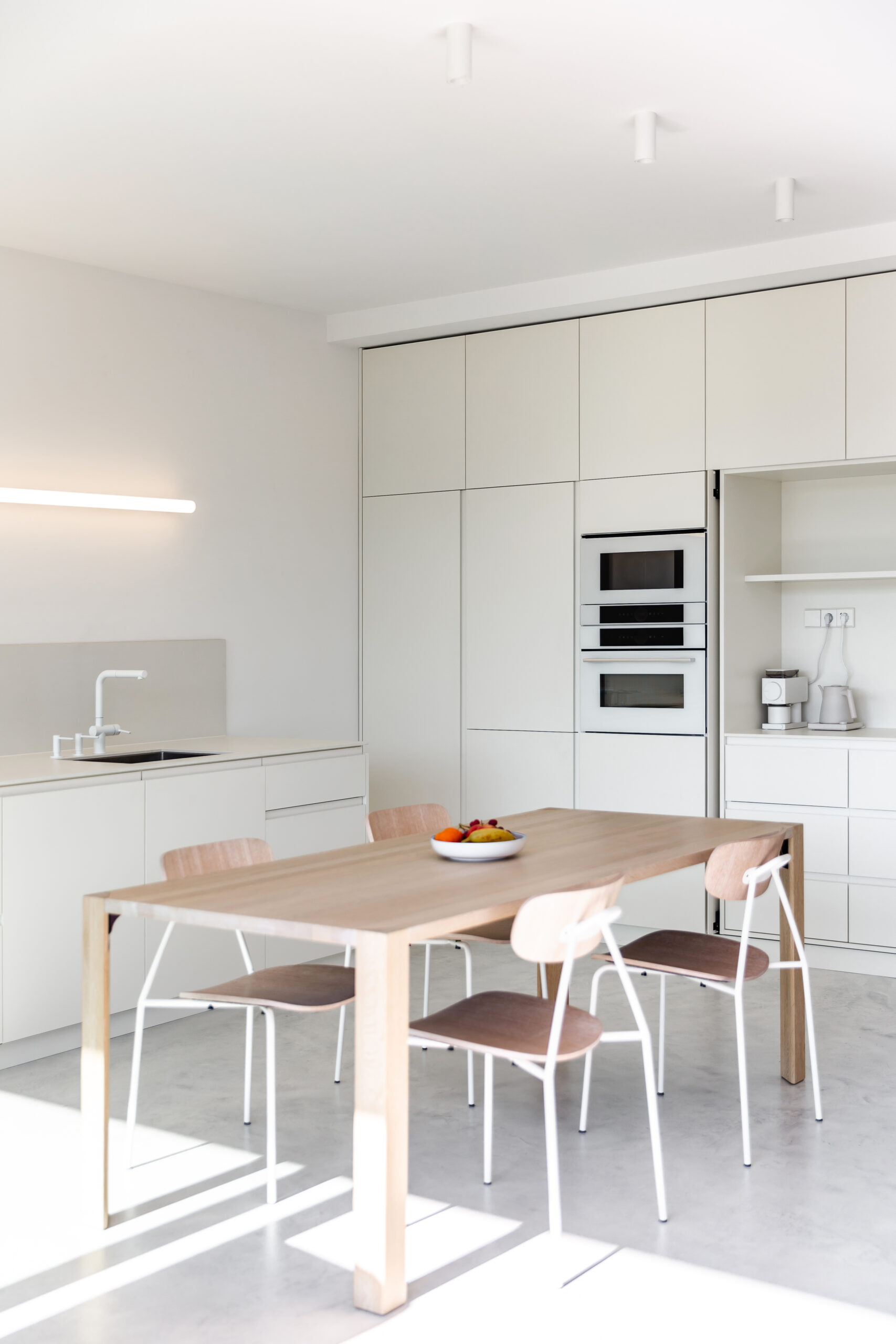
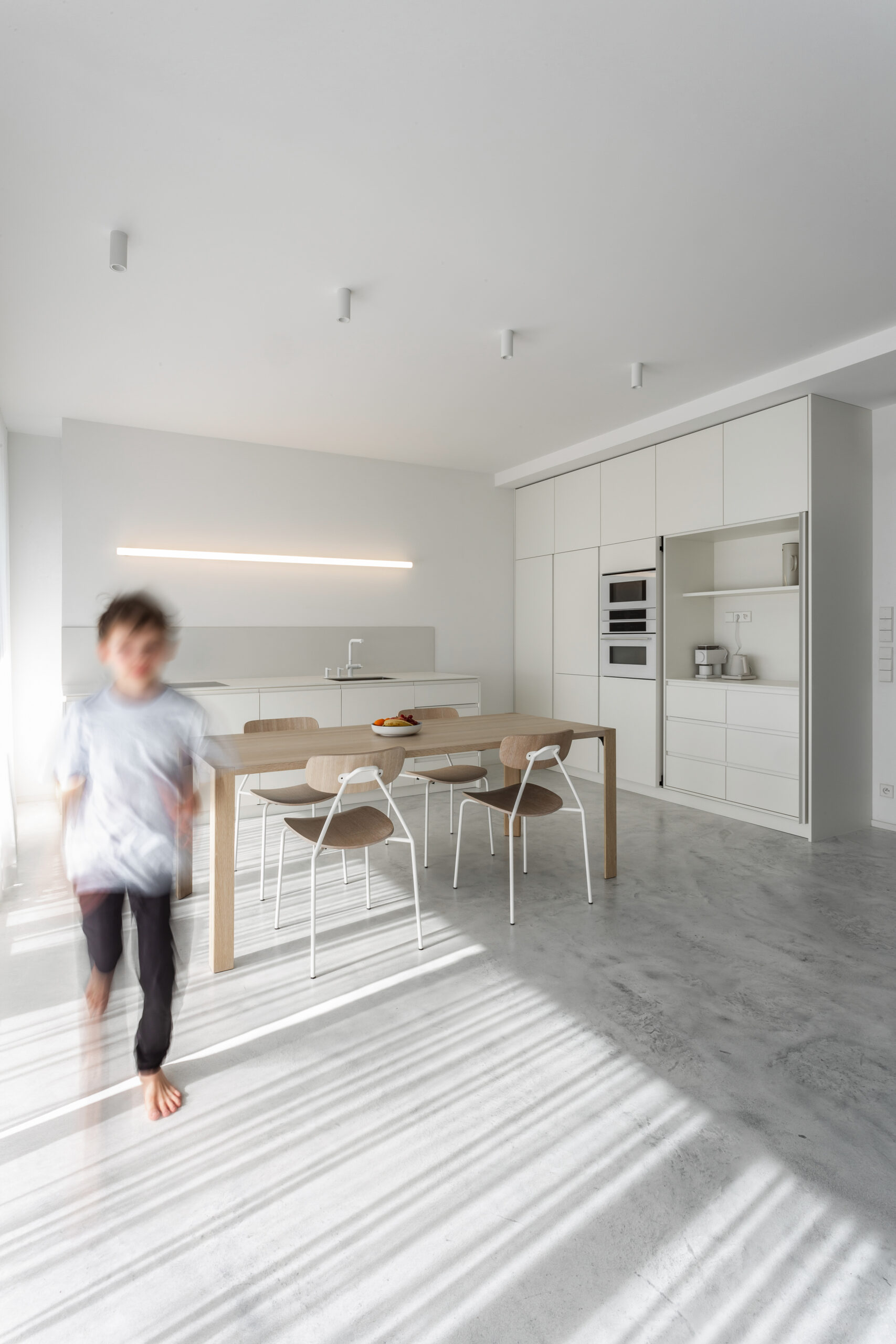
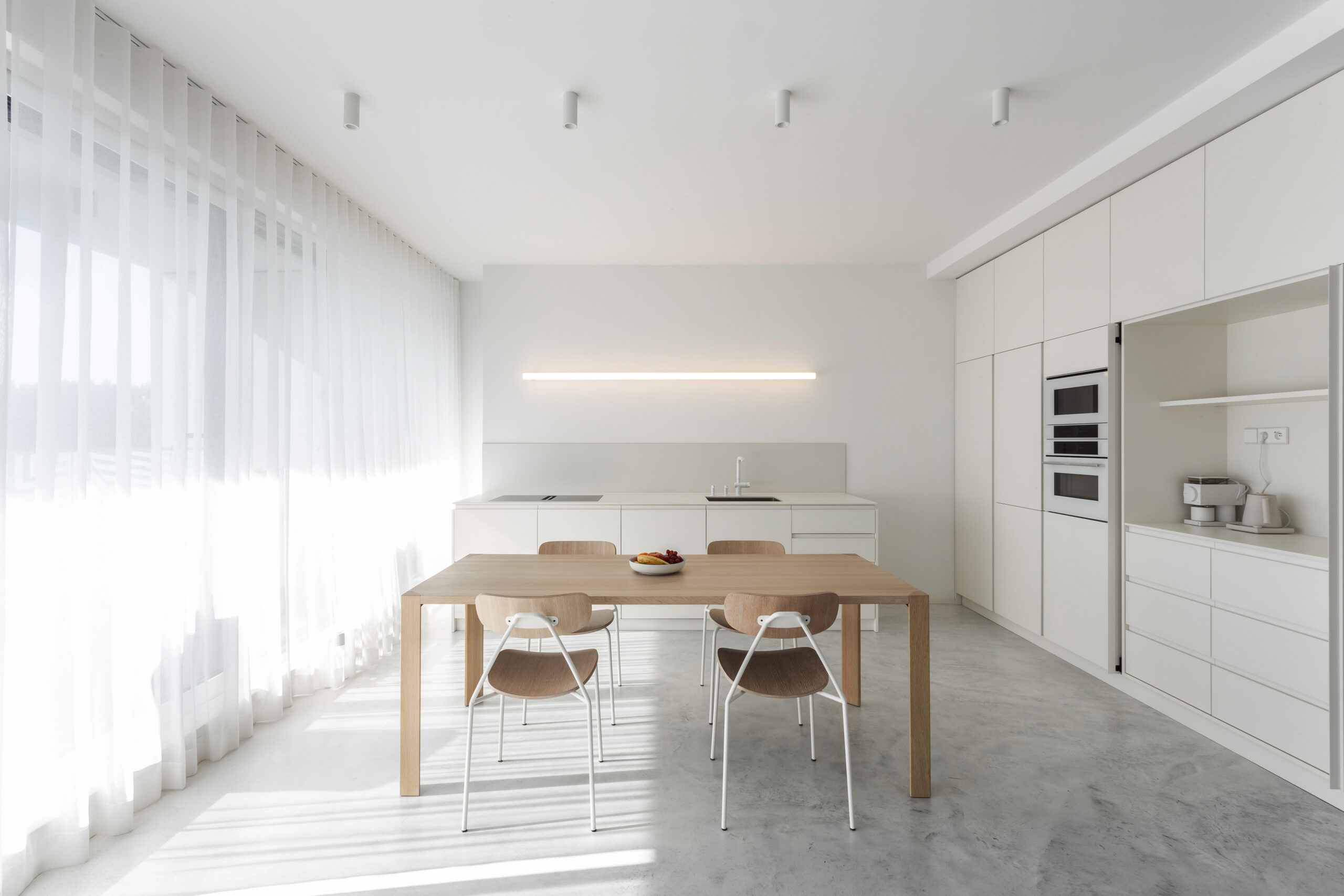
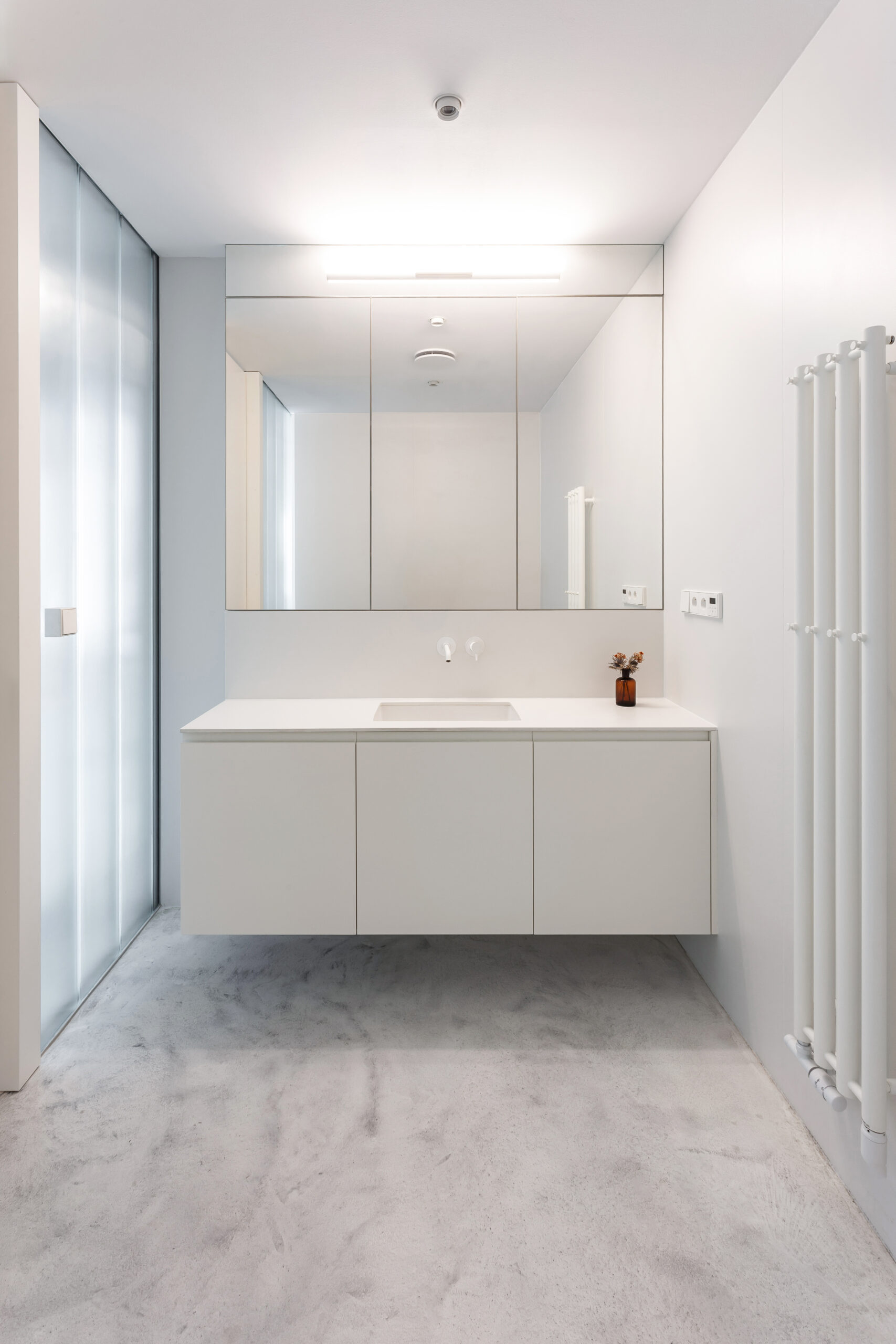
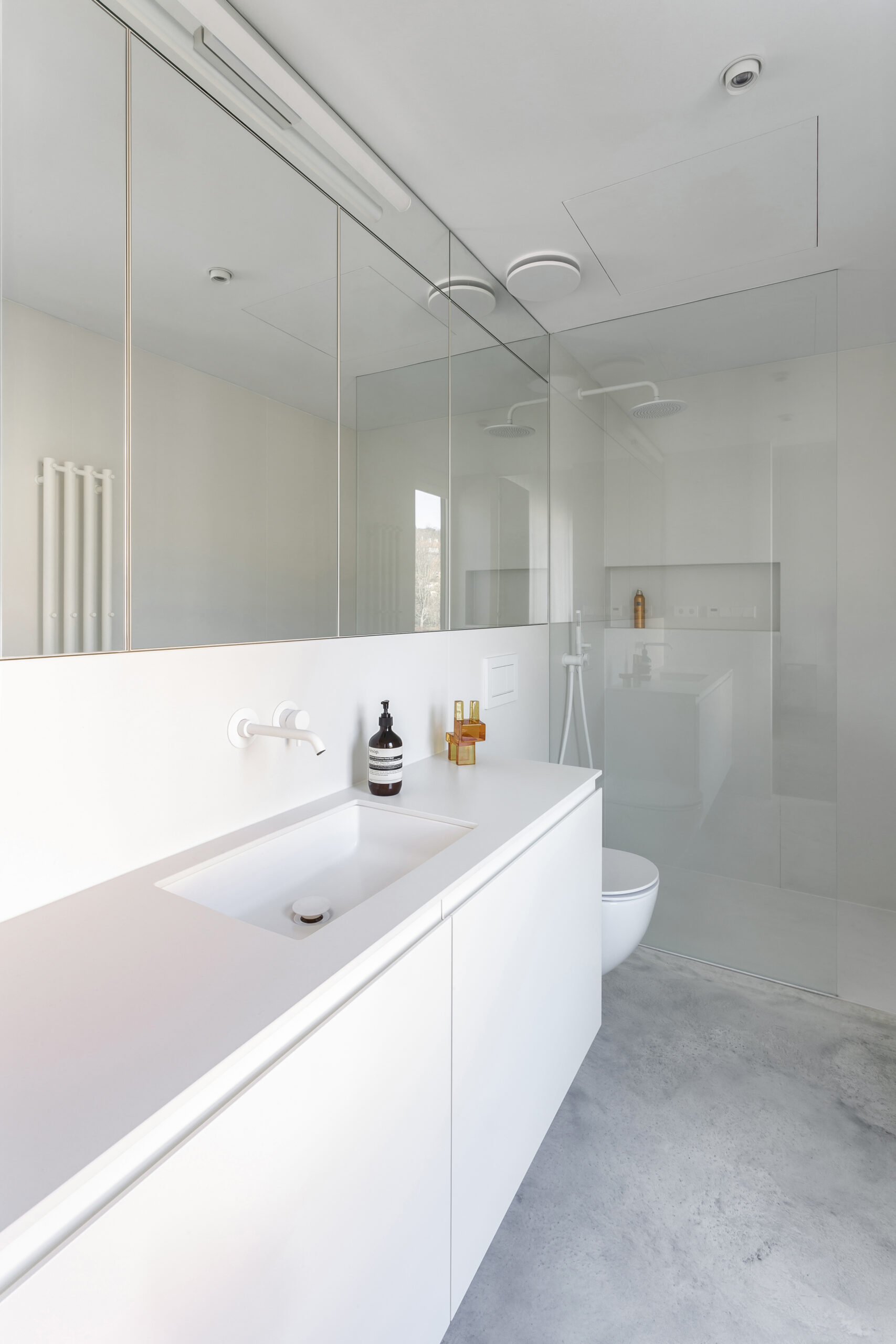
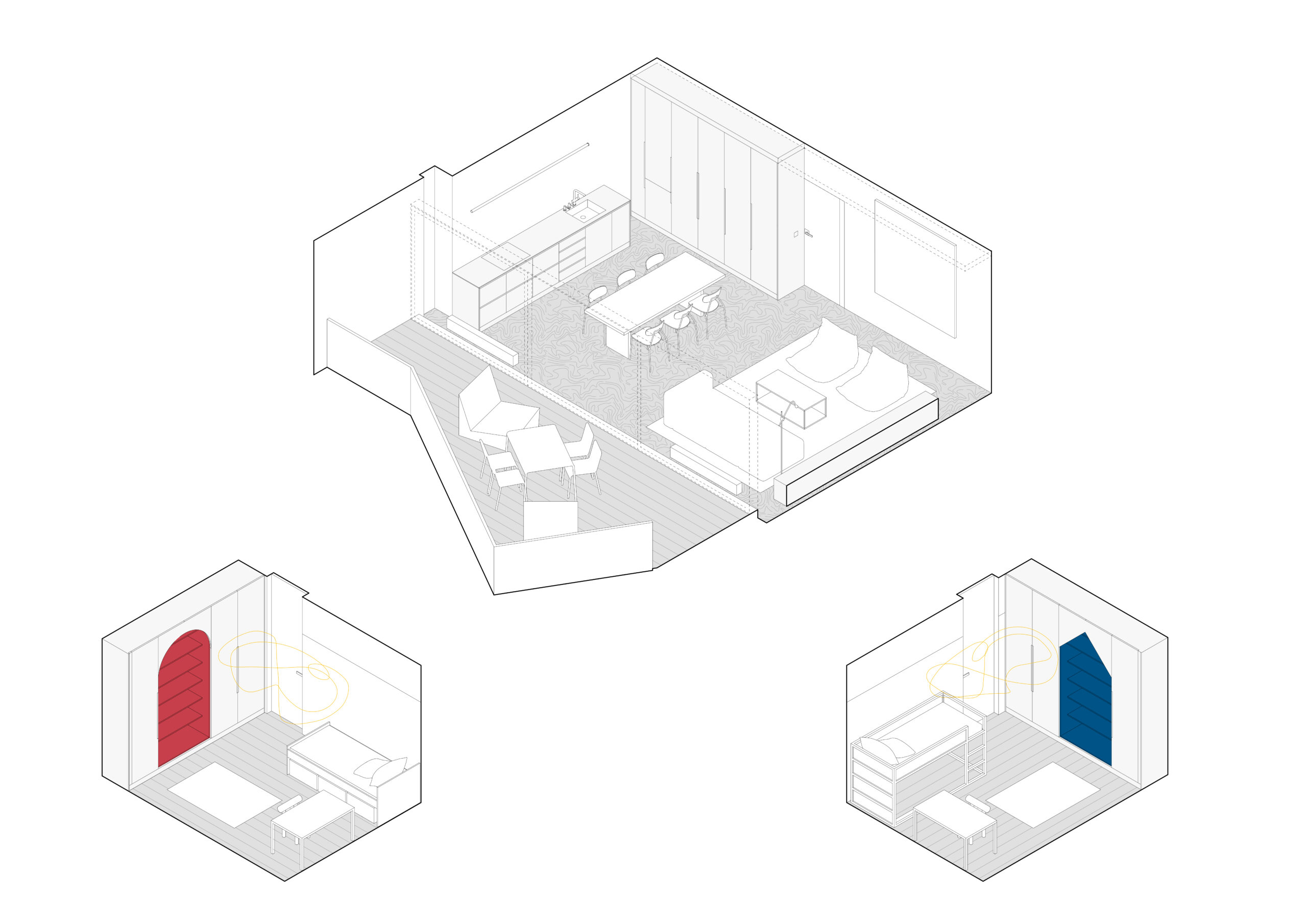
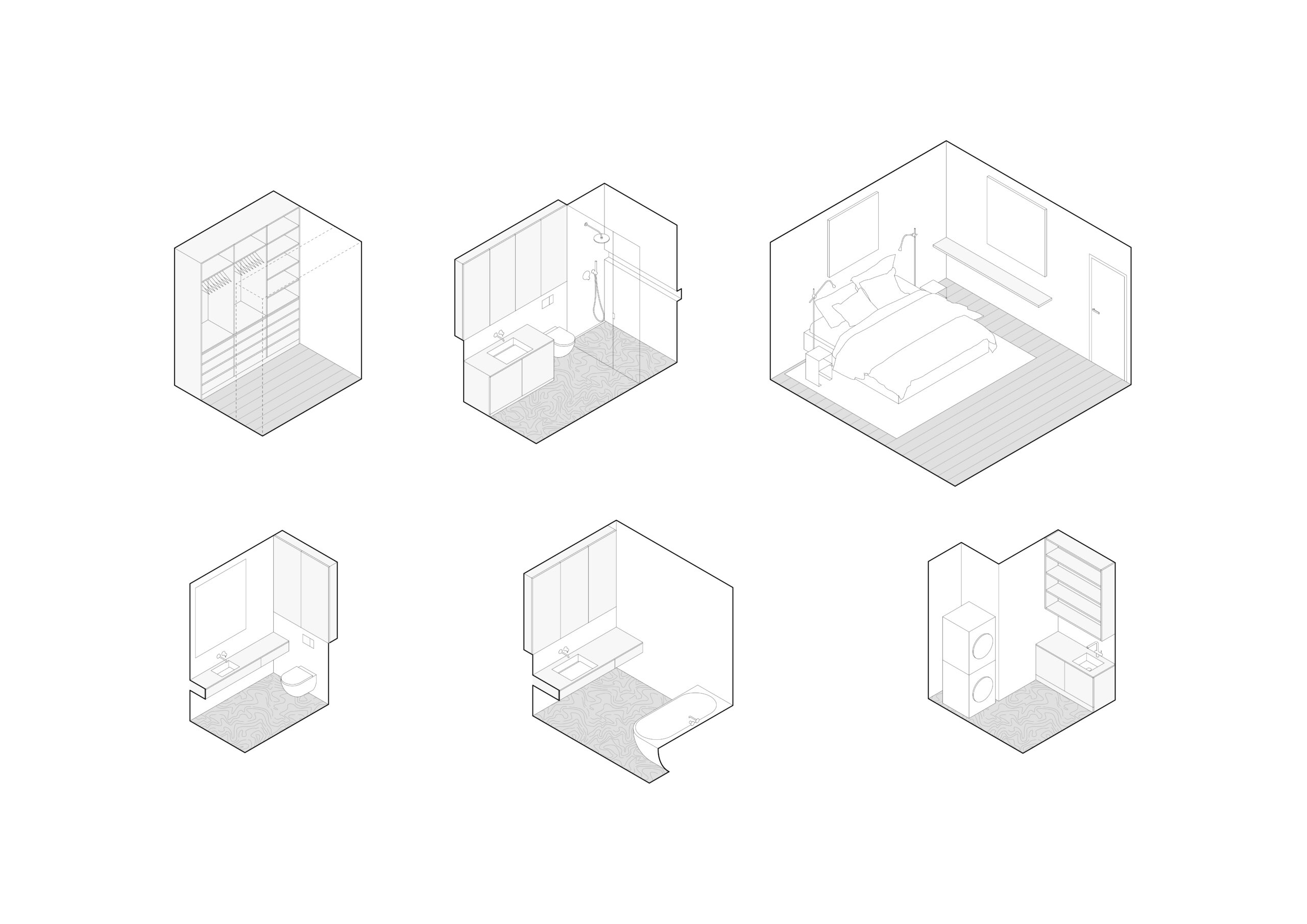
The interior is composed in a monochromatic palette of whites and greys. The deliberate absence of colour and ornament shifts attention towards material textures and the sculptural presence of freestanding furniture, which becomes the principal visual element within the space. A large custom-designed storage system is fully integrated into continuous wall planes, creating a calm and unified spatial expression. These compact built-in volumes absorb the practical demands of family life, reduce visual noise, and keep the floor area open and legible.
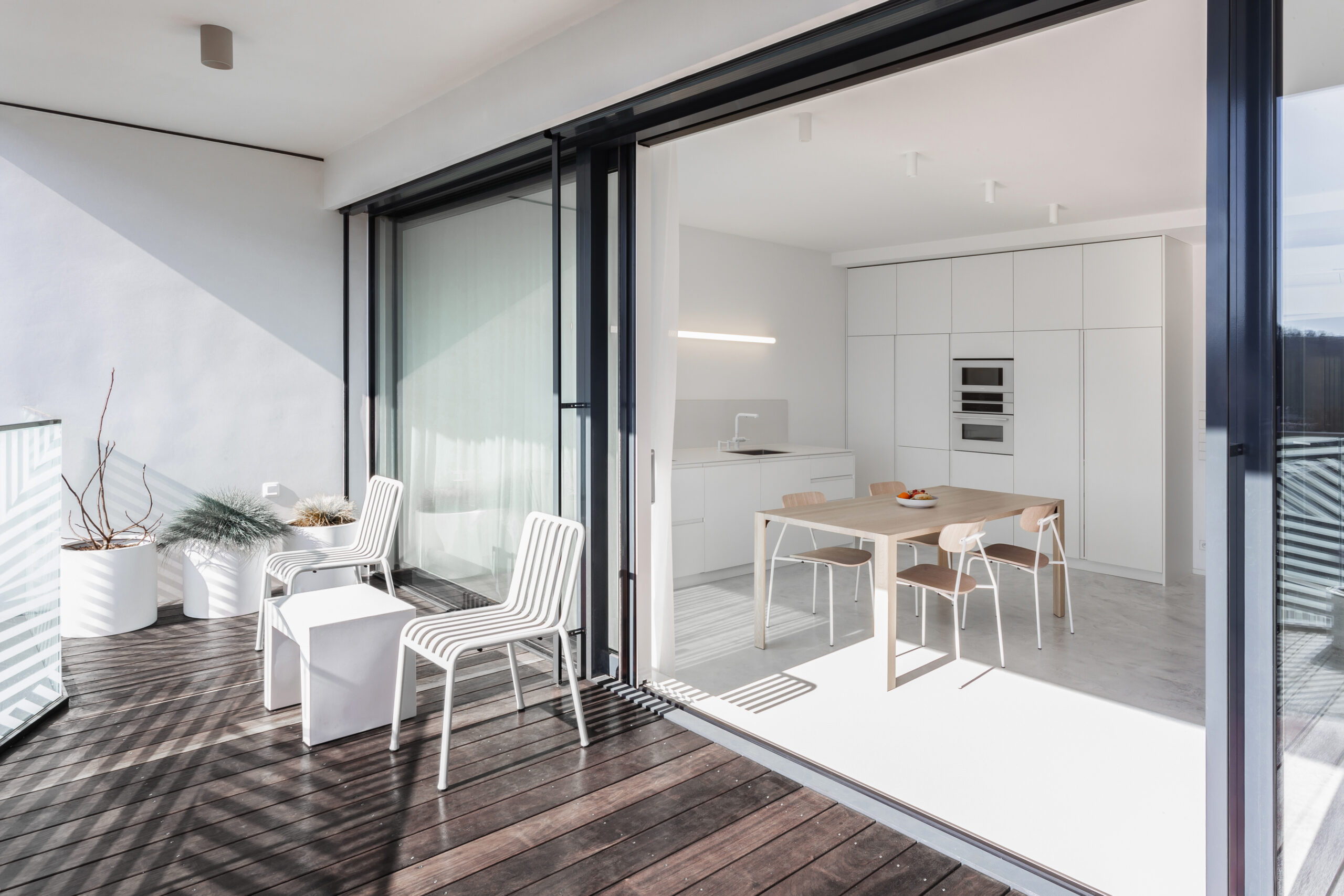
At the centre of the apartment is the living room, which opens directly onto a generous terrace overlooking greenery. Large-format glazing visually and physically dissolves the threshold between inside and outside. In the summer months, the glazed wall can be fully opened, extending the living space to a total of 62 m² and giving the family an unusually generous setting for everyday life and shared time together.
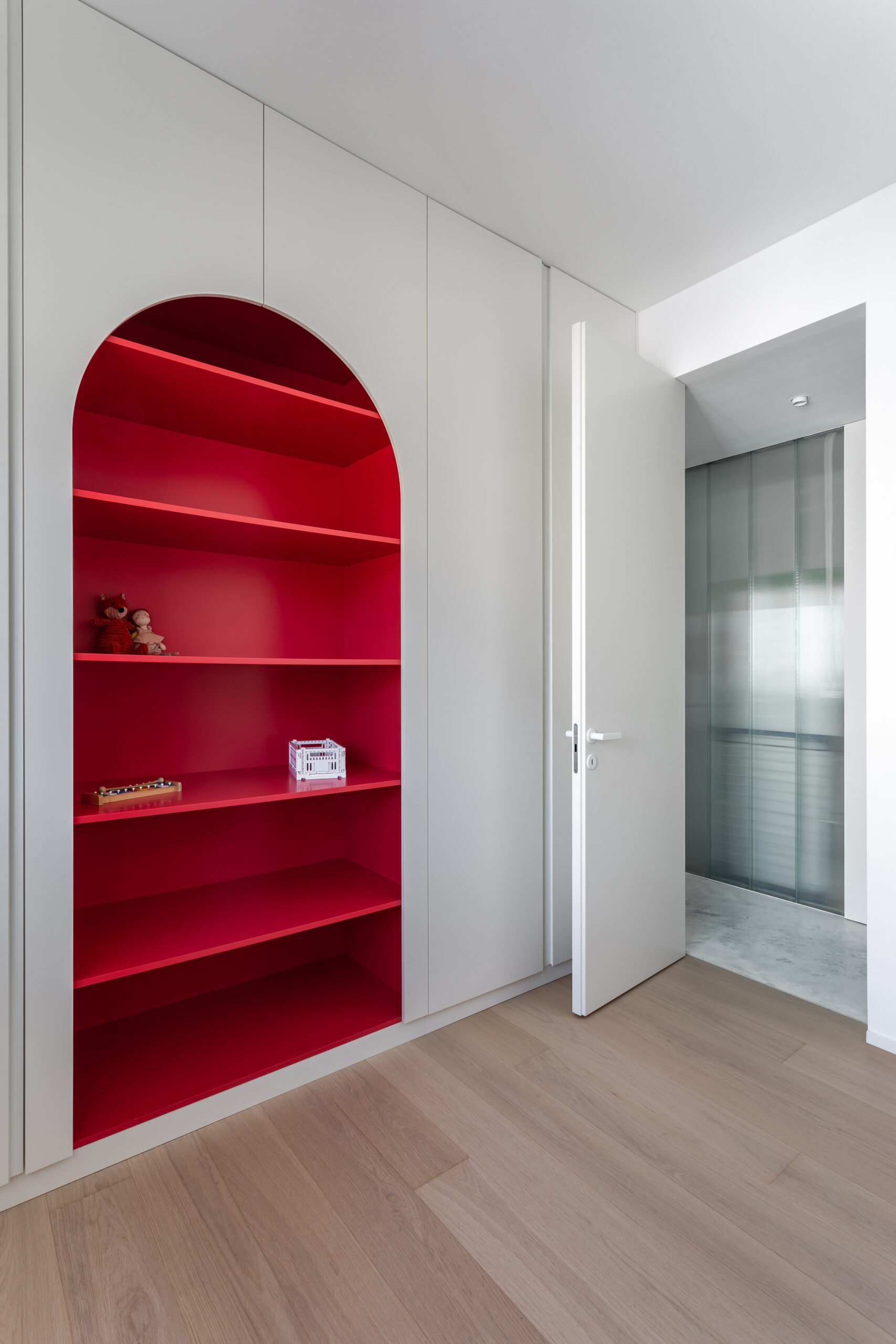
The only gentle departure from the overall concept appears in the children’s rooms. Here, muted colour accents were introduced through bespoke built-in shelving, adding a subtle sense of playfulness while preserving the clarity and restraint of the wider interior.
Photography: Jan Pernekr
A key theme of the project was how to bring daylight into the deeper parts of the plan, beyond the reach of the façade. This led to the introduction of a channel-glass partition separating the service core from the main living area. The semi-translucent material works as a natural light conductor, allowing daylight to filter deep into the apartment while maintaining privacy. The result is a softly illuminated entrance sequence whose character is defined by diffused light rather than transparency.
The interior is composed in a monochromatic palette of whites and greys. The deliberate absence of colour and ornament shifts attention towards material textures and the sculptural presence of freestanding furniture, which becomes the principal visual element within the space. A large custom-designed storage system is fully integrated into continuous wall planes, creating a calm and unified spatial expression. These compact built-in volumes absorb the practical demands of family life, reduce visual noise, and keep the floor area open and legible.
At the centre of the apartment is the living room, which opens directly onto a generous terrace overlooking greenery. Large-format glazing visually and physically dissolves the threshold between inside and outside. In the summer months, the glazed wall can be fully opened, extending the living space to a total of 62 m² and giving the family an unusually generous setting for everyday life and shared time together.
The only gentle departure from the overall concept appears in the children’s rooms. Here, muted colour accents were introduced through bespoke built-in shelving, adding a subtle sense of playfulness while preserving the clarity and restraint of the wider interior.
Photography: Jan Pernekr



×